Training Tip: Heart Attacks are Free
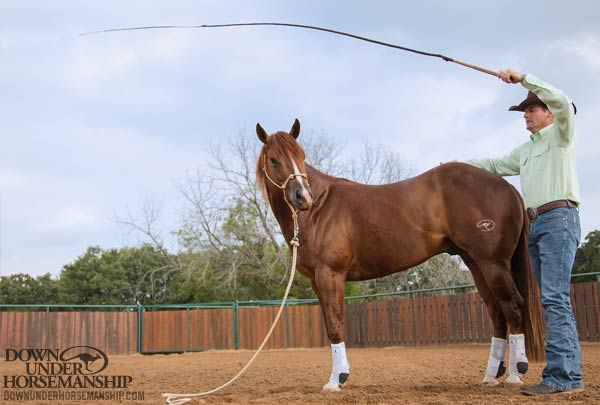
One of the biggest mistakes people make when working with horses is sneaking around them and making excuses for their behavior. In reality, trying to protect a horse from objects he’s scared of only makes the situation worse. As a trainer, your goal is to desensitize your horse to as many objects that move and make a noise as you possibly can. You can’t get that done if you’re afraid to scare him. When I’m desensitizing a horse, if he wants to get scared, that’s fine by me. Heart attacks are free. As long as he stays out of my personal hula hoop space, I don’t care if he has a heart attack. In fact, on a daily basis, I try to scare my horses with objects that move and make a noise. Every time I desensitize them, I will try to do it with more intensity and with scarier objects. If I end up scaring them, that’s OK because it gives me the opportunity to make them quieter. If I can’t scare them, that’s good too, because it tells me I’m doing a good job in training them. I know that the more objects I desensitize a horse to, the bigger the thinking side of his brain will get and the calmer he will be. I can promise you this: the more you try to scare a horse, the quieter he’ll actually become.
