Cinch Fitting Tips and Giveaway
By Classic Equine
The cinch is the lifeline that holds your saddle in place, which in turn keeps you in a stable position during competition. There is so much riding on your cinch, we wanted to give some helpful tips that will benefit you and your horse.
Cinch Fitting Tips
- First and foremost, you must use a cinch that is specifically designed with your horse’s comfort in mind.
- Choose a cinch by measuring the distance from one heart girth or “sweet spot” under the belly to the opposite one.
- When the cinch is tight, the D’s should lay flat and clean against the sweet spot. If it rides above or below that spot, it can cause soreness and discomfort.
- To allow flexibility or “give” as your horse moves, use a cinch/latigo combination. Leather is a natural fiber that has give. Leather latigos slightly expand and move with the horse as you ride, which is why we recommend them!
- Use a cinch with stainless steel hardware, which is long lasting and will not rust, corrode or bind up.
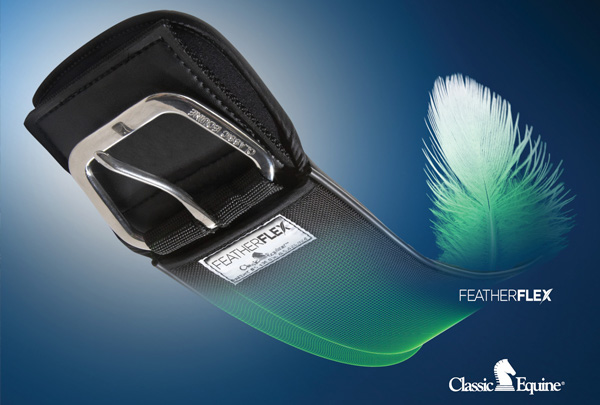
As summer is upon us, it means temperatures are rising and sweat and bacteria are an everyday occurrence with horses and their riders. Classic Equine’s solution to combating microbes and fungus is the FeatherFlex™ Cinch.
The FeatherFlex is made of extra soft, non-chafing virgin neoprene and is self-lubricating and reduces girth itch under extreme conditions. It is antimicrobial and antifungal, features stainless steel hardware that will not rust, and is designed to eliminate twist and distortion. The FeatherFlex™ comes in a roper style with sizes 28″-36″ and a straight style in sizes 24″-36″.
Be sure to stay tuned in to the Downunder Horsemanship Facebook page to get entered to win a FeatherFlex™ Cinch!
