Training Tip: Correct a Crabby Loper
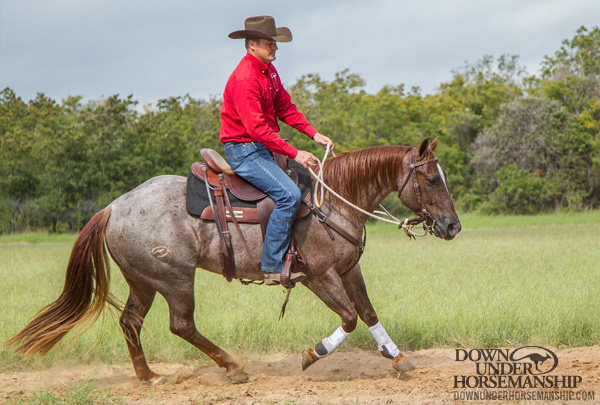
Until they’ve been taught to move forward off a gentle squeeze of your legs, some horses get crabby when asked to lope, especially those cold-blooded, lazier types. If your horse kicks up or crow hops when you ask him to lope and you feel it is more than you can ride through, do a One Rein Stop, disengage his hindquarters, get off him and get his feet really moving from the ground. Do Lunging for Respect Stage Two with lots of changes of direction; the more changes of direction you do, the more respectful the horse will become and the more he will start to use the thinking side of his brain.
After making his feet hustle on the ground, get back on him and act as if nothing happened. Ask him to lope again. It usually doesn’t take more than one or two times of doing this before the horse realizes two things: 1) He might as well go ahead and lope when you first cue him because if he doesn’t, you’re just going to up the pressure, and 2) kicking up to show his displeasure isn’t worth the extra work he has to do on the ground when you get off. When it comes to training horses, always make the right thing easy and the wrong thing difficult.
