Training Tip: How Well Does Your Horse Cruise Outside of the Arena?
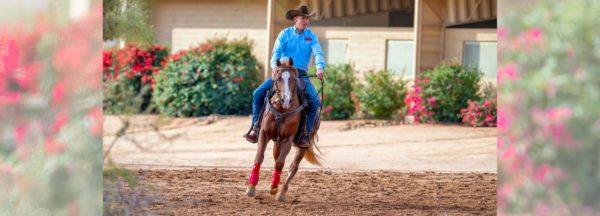
As far as I’m concerned, if a horse can’t maintain the gait and speed his rider sets him at on a loose rein—in an arena or out of it—he’s sorry-broke. When you can’t get a horse to move forward consistently without micromanaging him, there’s very little you can accomplish with him.
One of the exercises I teach horses when I first take them on the trail is Controlled Cruising. I want to be able to trot and lope on a loose rein and have the horse maintain that gait and speed by himself—not going any faster, and not going any slower. He should also maintain the direction you point him in with minimal steering from you.
Why It Works:
Just because your horse will maintain his gait in the arena doesn’t mean he’ll trot and lope with the same relaxed rhythm outside the arena. This is especially true if you don’t get him out of the arena much or if you’re taking him to a new trail. More than likely, your horse will be more reactive, his gait will be faster and may even feel choppier.
Controlled Cruising is very similar to the Cruising Lesson in the Fundamentals Series but adapted for riding outside the arena. You’ll need to find a suitable area to practice the exercise—a clear path is ideal so that you’ll have to do minimal steering. You’ll hold the middle of the reins in one hand and will place that hand on the middle of the horse’s neck or on the saddle horn. Then trot the horse forward.
To ask the horse to trot, squeeze his sides with your legs. If he doesn’t respond, cluck with your tongue. If he still doesn’t respond, spank with the end of the mecate or a dressage whip. Keep spanking until the horse trots.
If the horse breaks gait and drops to a walk, let him commit to the mistake by allowing him to walk for one stride. Then use squeeze, cluck and spank to ask him to trot again.
If the horse breaks gait and lopes, let him commit to the mistake by allowing him to lope for one stride. Then do a One Rein Stop to shut him down.
When the horse is consistently staying at the trot and following his nose in the general direction you point him in, start rubbing all over him with your free hand. You want him to be comfortable with you moving all around in the saddle.
When he’s moving confidently at the trot without trying to speed up or slow down, practice the exercise at the lope.
Since you’re outside in an uncontrolled environment, there will be times that you’ll need to steer the horse. But you’ll only pick up on the reins when it’s absolutely necessary. It is not necessary to steer the horse if he weaves on the path or if he rides close to some trees. The only time it’s necessary to steer him is if he tries to change directions. And even then, when you do steer the horse, you’ll pick up on one rein, get him pointed in the right direction and then put him back on a loose rein. If you constantly hang onto the horse’s mouth with the reins, he’ll never learn to be responsible for himself.
This exercise is great to put some steady miles under your horse’s feet outside the arena. Horses don’t get good at loping by standing in the barn or staying at the walk and trot. If you want your horse to lope slowly with cadence to his feet, you have to let him practice loping until he gets good at it.
Why You Should Practice It on the Trail:
Your horse should be as relaxed and consistent with his gaits outside the arena as he is inside the arena. I love it when I have to push a horse a little bit to go forward on the trail. I’d rather my horse was on the lazier side of the scale than having him hotter and wanting to speed up too much. It’s always easier to get a horse to speed up than it is to get one to slow down.
As a general rule, you should practice the exercise for 10 minutes at the trot and 10 minutes at the lope. Although people underestimate how much loping you can do on a horse, your horse can easily lope for 10 minutes. If it’s a really hot day, you may have to cut the time down to seven minutes. Use common sense.
I find that it takes three to four sessions of this exercise before horses get good at it. We practice this at clinics, and on the first day, horses are going 10 times faster than they were in the arena and are taking off. The second day, they’re still fast, but after five minutes of loping, they begin to slow down and mentally relax. By the third day, most horses settle into a nice, relaxed lope with cadence. If you want your horse to get good at something, you have to allow him to practice it. Your horse can’t get better if you don’t let him practice!
Looking for more training tips? Check out the No Worries Club. Have a training question? Send it to us at [email protected].
