Training Tip: Rollbacks on the Fence Can Improve Your Horse’s Steering
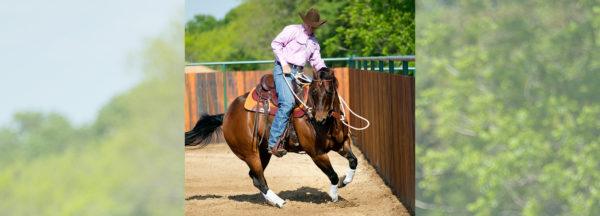
The more changes of direction you can do with a horse, the better your steering gets. Rollbacks next to the fence work great on horses that have limited steering and work off their front ends. Normally, if your horse is kind of stiff and heavy and not very well-trained, when you turn left, he’s not going to stop, collect himself and turn left with any degree of sharpness. But by using the fence, the horse has two choices. He can keep going forward and bump his nose on the fence, or he can stop, collect himself, suck back over his hindquarters and turn. The sharper turns you can get your horse to do, the more he’ll start to work off his hindquarters. The bigger U-turns your horse does, the easier it is for him to be lazy and drag himself through the turn with his front end. Basically, the fence does all the work and because you’re constantly reinforcing to the horse “Stop, turn, stop, turn,” that automatically puts the horse’s weight back on his hindquarters and improves his steering.
Learn how to teach your horse how to do rollbacks in the Intermediate level exercise, Rollbacks on the Fence.
