Training Tip: Sometimes You Have to Increase Pressure
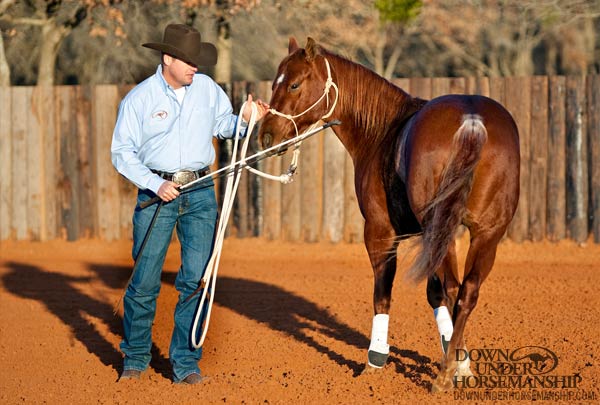
Most people want to start with a low amount of pressure, which is great, but when their horse ignores them, or doesn’t move his feet, they don’t increase the pressure. It’s important that you first ask the horse to respond with the lightest amount of pressure possible because a horse will never get any lighter than the first amount of pressure you apply. If he chooses not to respond, you’ll increase the pressure until you get what you’re looking for. Ian Francis, one of my mentors, says it like this: You ask, you suggest, you insist, you enforce. Regardless of how you phrase it, the ultimate goal is to ask with the least amount of pressure and increase that pressure until you get the response you’re looking for. If you start gently and finish gently, then eventually being gentle will be all that’s necessary to get the job done. You’ll do what you have to do to get the job done. You’ll do it as easy as possible, but as firm as necessary. If you always ask gently, then increase the pressure as needed, over time all you’ll have to be is gentle.
